ilayda
altuntas

Brianna M. Silvain
This project includes three soundscape activities: creating sound maps, maintaining sound journals, and producing soundscapes, along with visualizations of the resulting soundscapes.
Soundwalk I:
Child-centered learning/places
Sound Journal
I personally had mixed feelings about recording where I worked, but I feel that I managed to be respectful of the space and engaged with the concept in a way that would be ethical for this project. I wanted to capture a space in which I engage with regularly as it creates a more reflective narrative into how I engage in the space. The only completely verbal part of the recording is a student saying my name whispering to another student something I otherwise would not have heard. I found that that along with the nature of the transition was a really interesting way to engage with the space and understand how students engage with the space. This space is the school that I work at during their last transition of the day. I recorded this in passing while walking in the hallways. In efforts to mitigate any identifying features of students I cut and edited the audio as well as textured some parts of it while still maintaining the parts of the audio that are important.
The recording captures me walking past students' cubbies, sneakers squeaking on the floor, and students putting things away, whispering, and announcements. The space is very active and emphasizes timing and effectiveness. In my opinion, this active transition is more beneficial for students because it creates a sense of status quo for how they physically move throughout the school and prepares them for their next subject. I also feel that the responsibility of gathering what they need falling on the student rather than the teacher is an effective way to encourage students to become aware of their own needs.. The environment encourages students to engage with the concept that they are a whole person responsible for their readiness to engage. This concept directly connects to Lowenfield's theory of the enlightened child and the maladjusted child. As students take responsibility for their preparedness, they enter a state of discomfort that ultimately encourages growth.
Reference
Lowenfeld, V., & Brittain, W. L. (1964). The meaning of art in the classroom. Creative and mental growth (4th ed., pp. 52–90). Macmillan.
Sound Map


Soundscape Visualization I: Printmaking




Soundscape II
Soundwalk II: Sounds of the Past
(Historical Places)
Sound Journal
Crossroads at Silverbell park has always been a part of my life as a location for celebration and family. By participating in a soundwalk of this location I got to also see its historical value in a deeper, more meaningful light. The location is an archeological site for the Hohokan Indian and was used for farmland where 100 pit structures, 300 human burials, pottery shells, tools, and bones were found with 55,000 artifacts recovered from the site. Some of which were donated to the Arizona State museum. The site also now functions as a recreational hub with many sports fields and play areas with some of the archaeological site still exposed to the public.
As I went early in the morning I got to experience calm peaceful natural sounds without the usual human interaction with the space. In my sound walk I got to hear the rustling of trees, gravel as I walked, crickets chirping, and wind rushing with the echo of cars in the distance. The sounds are very different to what would have been experienced by the tribe that previously inhabited the land. Considering that the site originally had water rushing and obvious human development it is an interesting juxtaposition to the current use of the land. The inclusion of the Tohono O’odham nation and the Pascua Yaqui Tribe is also very prevalent with the site as there is inclusion of some of the original architecture as well as Obelisks with mosaic panels. I definitely want to revisit the site when it is very busy to see what changes in the sounds of the location.
In understanding how this site can work in the future with this community I feel that this site can be explored in a k-12 setting as a field trip as there are a lot of very rich resources nearby to tie into lessons. I also feel that the location is very good at tying in the current community to its past community creating this deeper connection to us and the history of the land. I also feel that it is a great method in diversifying education that complicates the narrative of these people being in the past but that there are still remains in this community right now.
Sound Map


Soundscape Visualization II: Digital Collage
This sound collage represents my visit to a park near my home that is also a historical site. This site was a Native American settlement at one point and holds artifacts of the past while also functioning as a park today. This collage combines photos of the location with picture book illustrations interacting with it. I chose to also mix actual audio of the location with what is currently missing from its past, a river. The sound comes in with a relaxing flute as a reminder of what has been lost at this site, as well as to reflect how the site is still being used today.
Soundscape II
Place holder text.
Soundwalk III: Decolonial Practices
Sound Journal
At the beginning of this experience, I was a bit confused about what we were planning to do for the soundwalk. Combined with the fact that we got lost on the way, there was a unique and interesting way to enter the experience.
When we began with the tracing footsteps soundwalk, I felt that I was still trying to grasp what we were doing in this space. I started with an enclosed area that I felt called to go to. I remember the sounds of the wind and the movement of the trees. At first, it was all very relaxing until I heard the flies that kept following me the whole experience.
For the listening and touch portion, I was touching a branch on the ground that had fallen off and was really dry. I was surprised that it made very interesting sounds as I dragged and touched it, which led me to play with it a little. I remember the bark being very dry and flaky. During that sound walk, I walked further up where I found my next object.
The embodied decolonization portion of the soundwalk was me drawing a stick on a stone, then on the ground, to see how they would interact. The sensation was rather uncomfortable to hear and to feel.
For my personal experience at this soundwalk site, I would say at first I struggled with connecting to the site, but through revisiting it through the recordings I took, where I once saw death and discomfort, I can see what I missed through the recordings saved. At the time when I was at the site, I ended up walking in circles at one point as I was answering the questions, stepping forwards and back, leading me into this circle under the blazing sun I felt physically uncomfortable to the point I was unable to see and hear from the location.
When I say I hear the site in a new way, I mean that I can hear the rushing wind mimicking water flowing in the background in my first clip. I can hear that I was using nature in a way to create joy through play. And I can hear my experimentation trying to find my place in this greater environment that was not man-made.
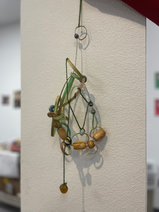
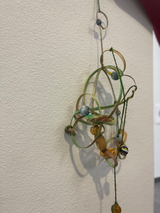
Soundscape Visualization III: Sound Sculptures









Soundscape III
Place holder text.
References
George Phar Legler Society. (n.d.). The whole story. Valley of the Moon.
Power in Numbers
Programs
Locations
Volunteers